Mar
—
May 2026
Making Errand Planning Smart & Delightful
Role
Tools
Skills
Figma
ChatGPT
Figma Make
Claude
Interview design
Vibe coding
Interaction design
Grace Ho
Sofia Harmon
Rutuja Nagulpelli
UX Designer
UX Researcher
Developer
Team
Problem
After a long day of work, planning errands feels like a second shift
Urban professionals know they need to stop at the pharmacy, grab groceries, and drop off a package. But deciding the order, checking if places are open, and managing unexpected wait times adds a cognitive load that compounds an already depleted state.
Existing tools solve parts of it— map apps navigate and task apps create to-do lists— but nothing bridges route optimization with personal energy levels or anticipates friction before you walk into it.
Goal
The solution needed to make fewer decisions visible
The goal of this Errand Planning project was for busy adults who live in walkable cities to solve for decision fatigue and to make the experience of running errands more enjoyable.
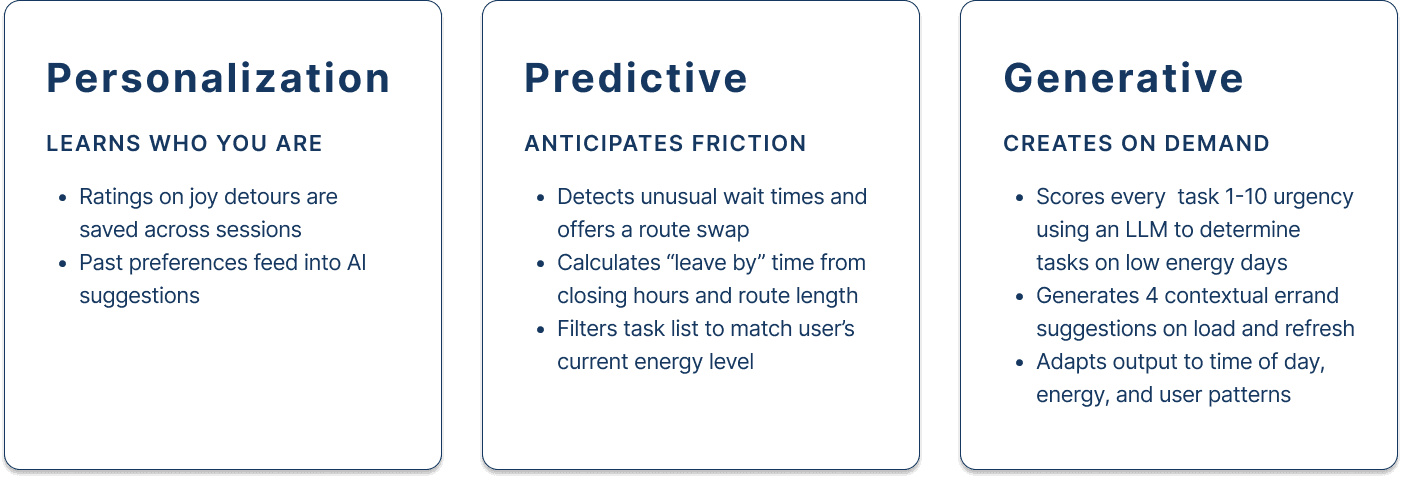
Our solution would leverage personalization, predictive, and generative AI to create an adaptive experience that learns from past user behavior.
Research
& Discovery
Efficiency is the goal, delight is the differentiator
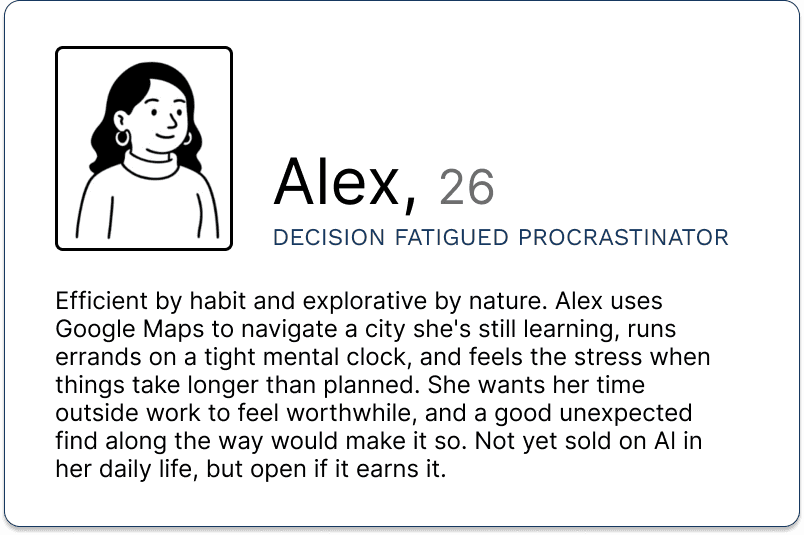
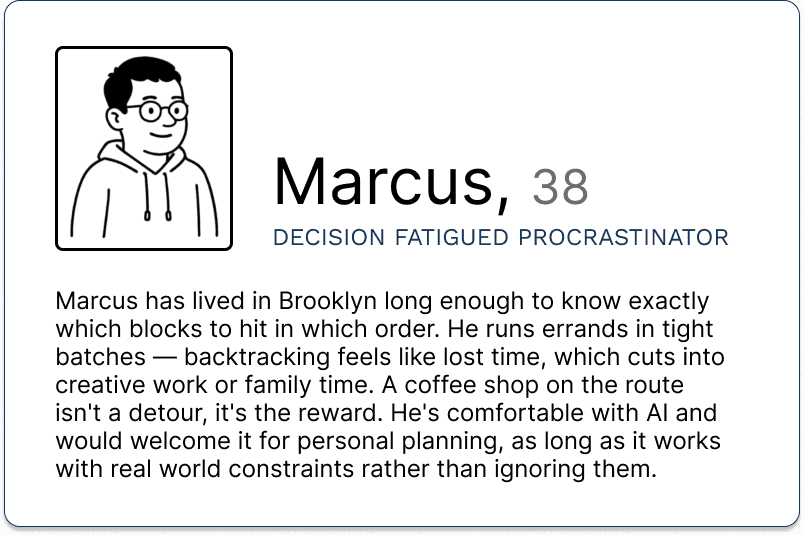
We conducted four interviews with people aged 27–61 who run errands on foot in urban environments. Participants ranged from a structured loop-planner to a mood-driven spontaneous errand-runner. The differences in style were wide. The underlying frustrations were almost identical.




We built AI versions of our users, then interviewed them too
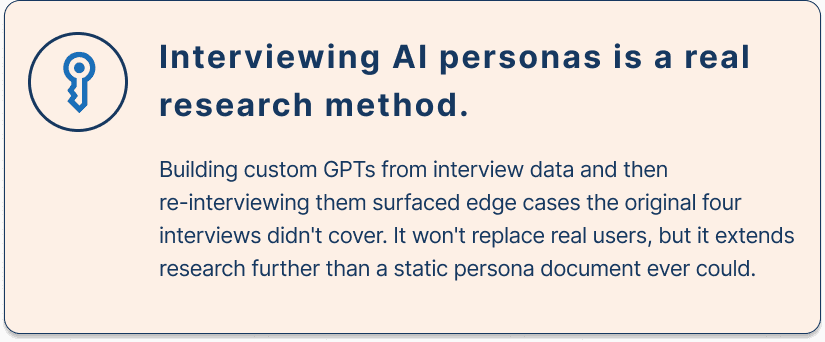
Interview data was synthesized into two custom interactive GPT models. We then conducted additional interviews with these personas to stress-test design decisions and surface edge cases real participants hadn't raised. The personas were a live reference throughout ideation, not a static document.

Key Insight
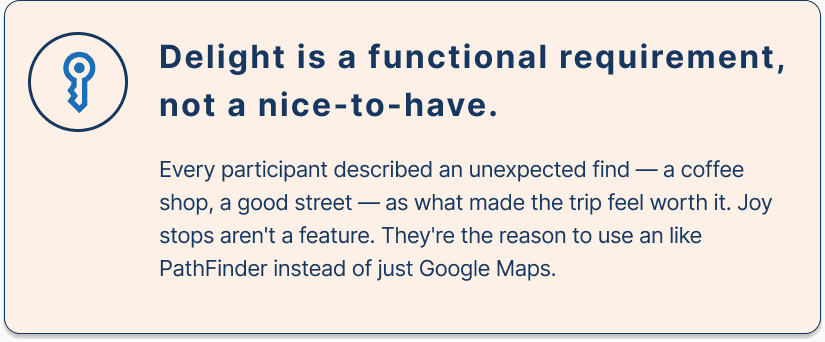
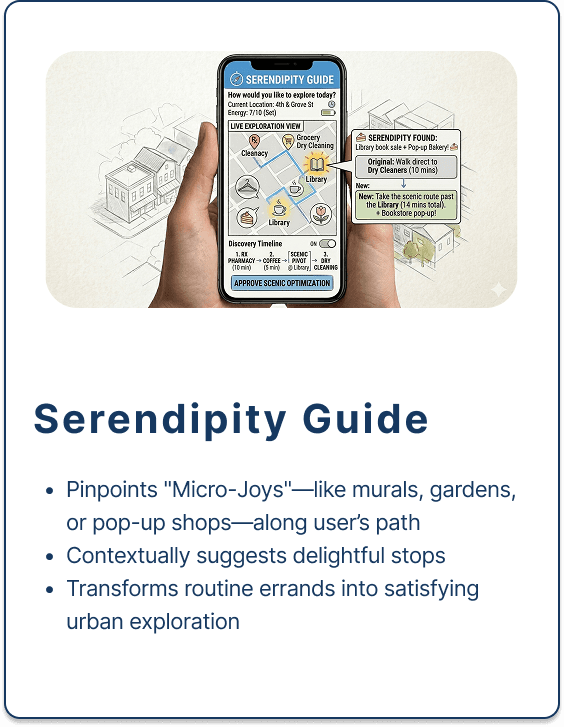
Participants and personas were frustrated with obstacles to their max efficiency, like wait times or carrying heavy burdens, but when asked what would make errands better, micro-joys like exploring new shops make going out feel worth it.
Concept & Design
Calm in the Chaos
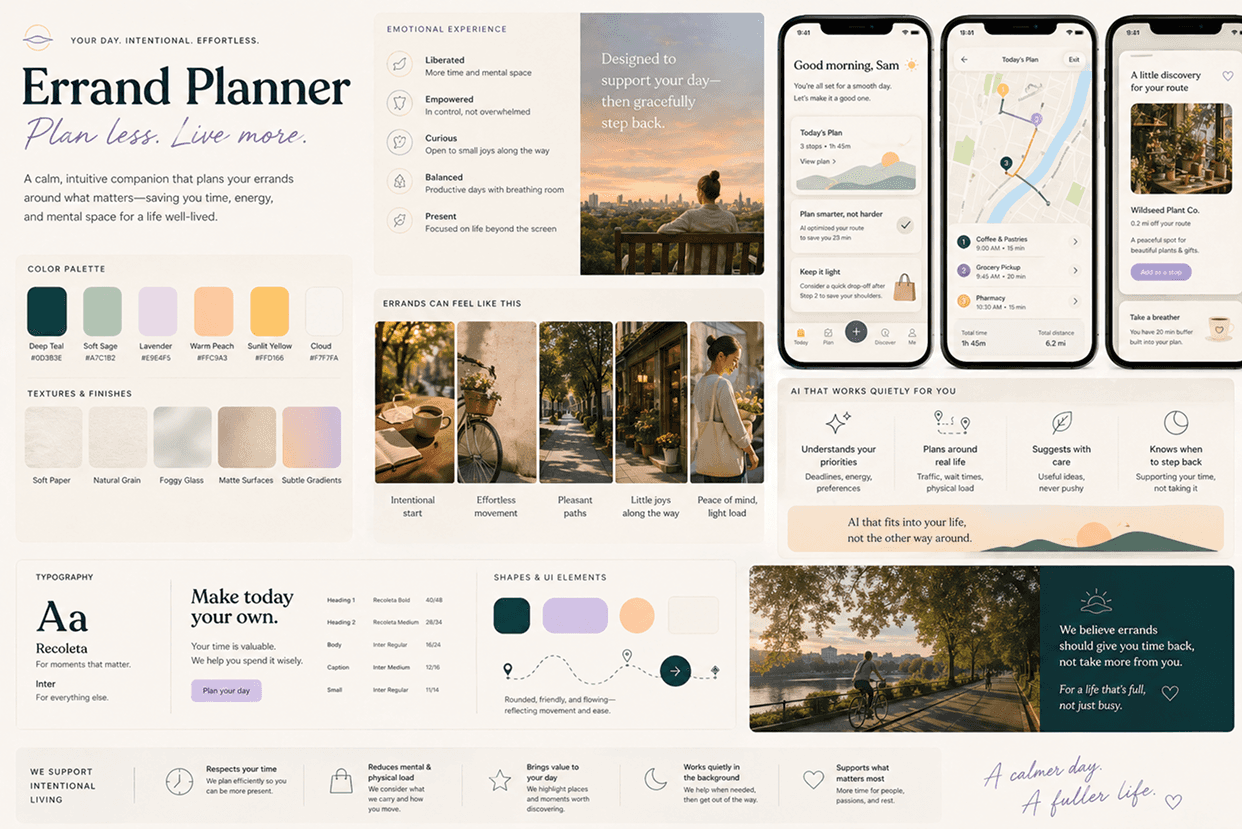
We used AI to generate mood boards based around effortless living and reclaiming time. The palette we chose in the end represented the simplicity we wanted instill into the daily chaos of planning what to do after work.
Brighter, yet still muted palette keeps user calm and motivated
Colors are reminiscent of nature patterns to get users outside
Simple designs and ample spacing are less overwhelming, aligning with low cognitive load
Ensuring intuitive flows to reduce friction
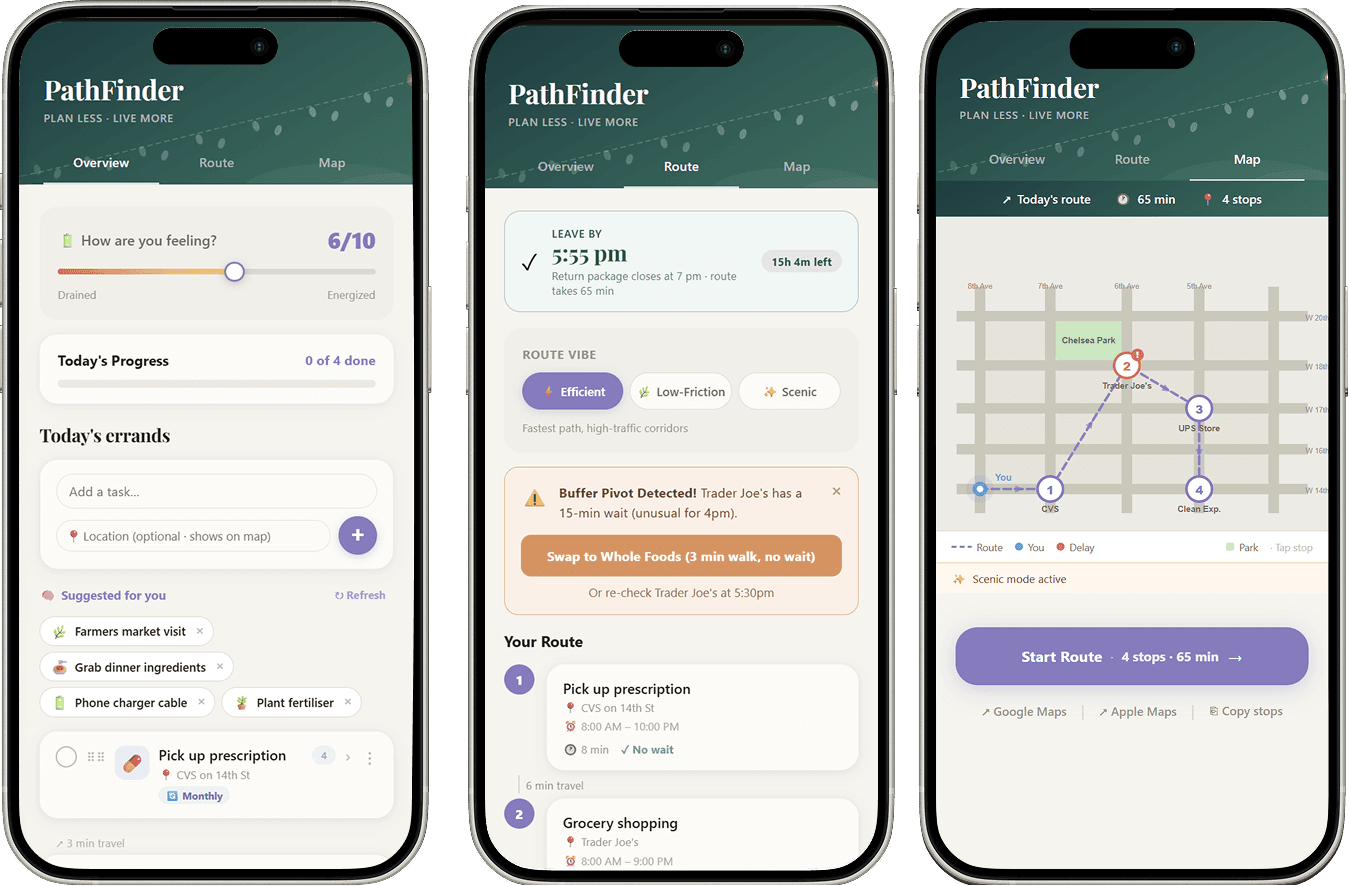
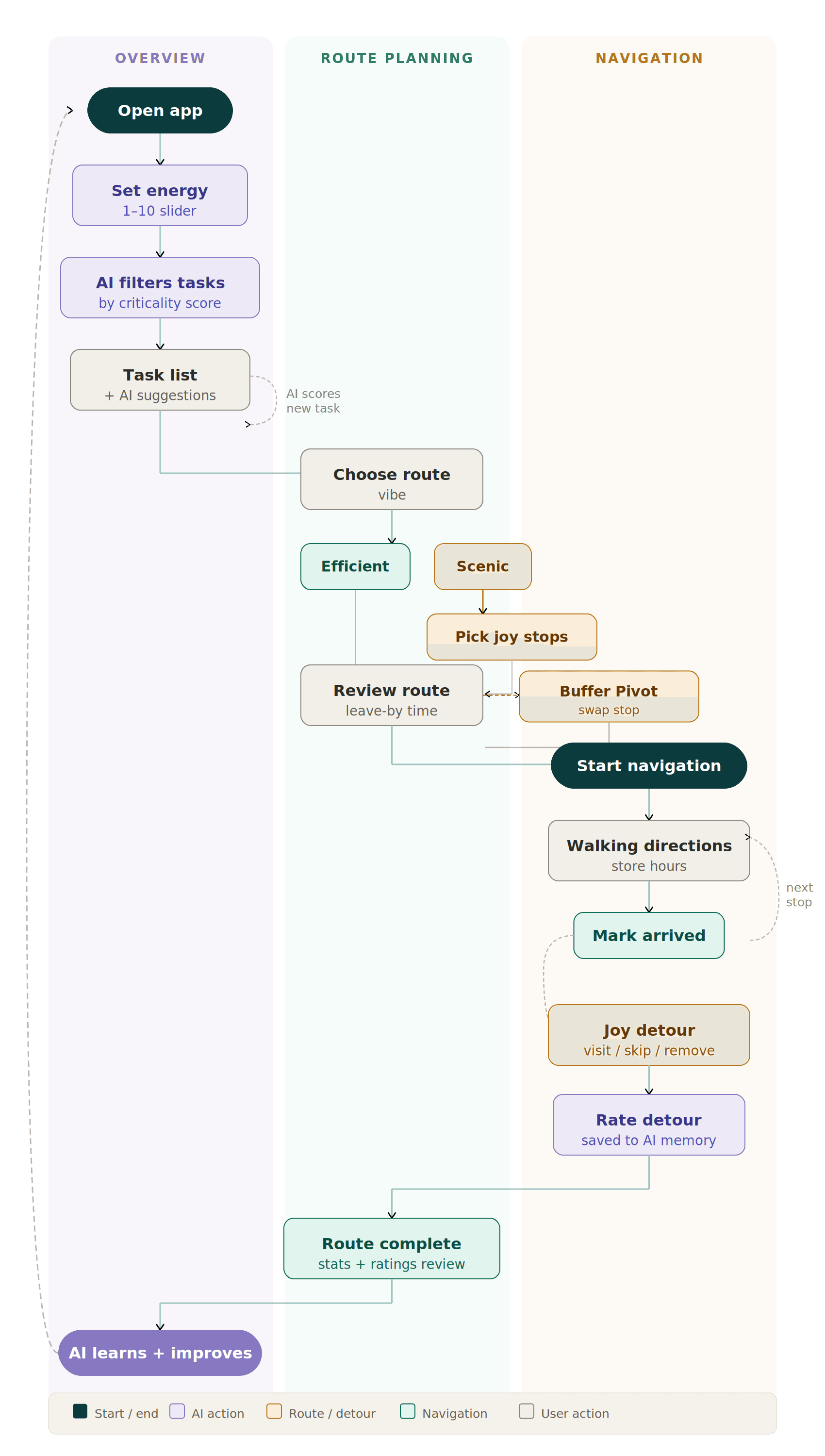
The journey moves linearly through three lanes.
Overview: set energy, AI filters tasks by criticality, add tasks and get scored instantly.
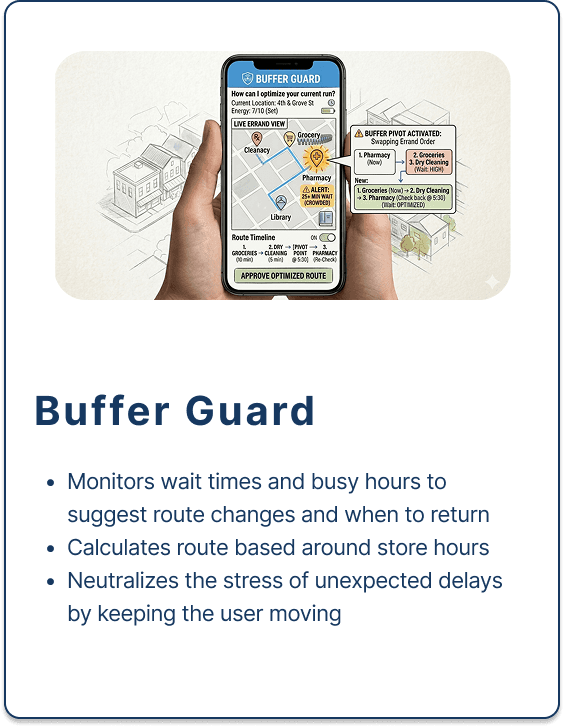
Route planning: pick a vibe, configure joy stops if scenic, review the route with a live leave-by time — a Buffer Pivot alert can swap a stop before you leave.
Navigation: alternate between main stops and joy detours, rate each detour inline, finish the route and review. Ratings feed back into the AI, making the next session smarter.
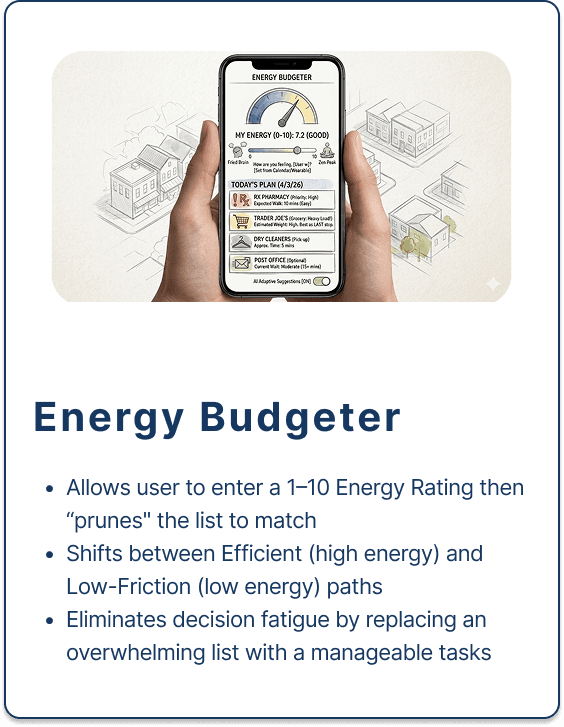
Core features that define the experience
Prototype
Designed and built, end to end
PathFinder is a fully interactive mobile prototype with drag-and-drop interactions, navigational wayfinding, and a completion screen that fires confetti when the last errand is done for the ultimate dopamine hit. It includes options for storing grocery lists, discovering micro-joys around your neighborhood, and moving tasks tomorrow for a perfect balance between efficient and delightful.
Try it out!
Interesting in getting the full experience? Try out the interactive prototype below!
Prototype
AI works best when you don't notice it
PathFinder uses AI across three distinct paradigms, combining the effects to create one custom experience.
Next steps to turn a prototype into a product
Adding push notifications
Integrating true live mapping API
Connecting a proper LLM for task pruning
Key Learnings